Find Reflectorless Erect Total Station for Surveying Mapping and Construction
Explore 30 reflectorless erect total station models from Chinese manufacturers. Buyers can compare accuracy, measurement range, and storage capacity to select the right instrument for land surveying, construction layout, and mapping projects.
Key considerations
Products List


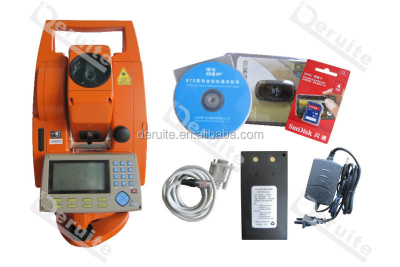


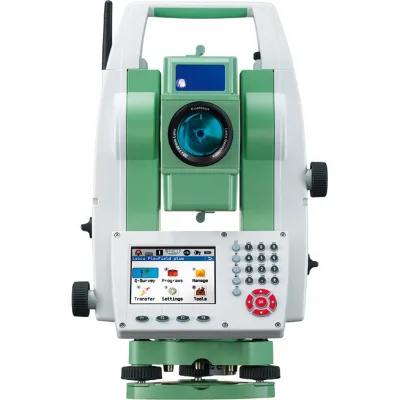
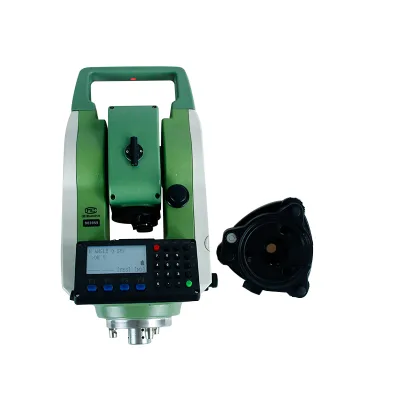

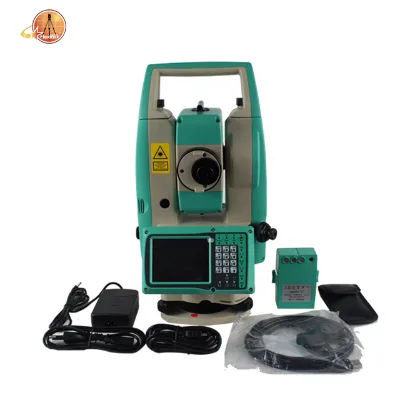


Comprehensive Sourcing Guide
Strategic Sourcing Guide for Reflectorless Erect Total Stations
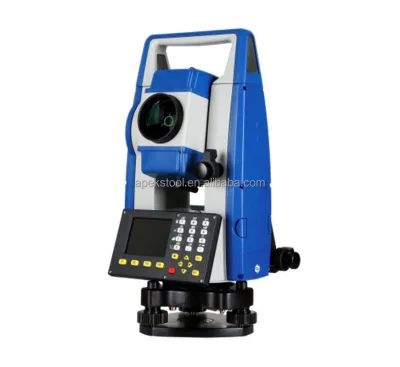
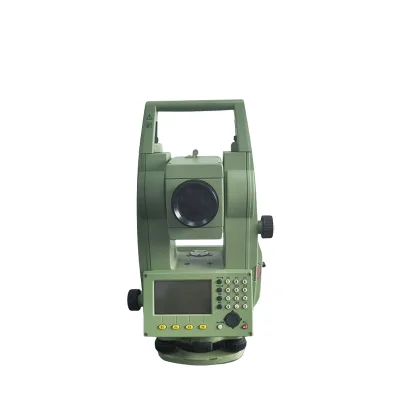
The procurement of a reflectorless erect total station represents a significant investment in surveying infrastructure, demanding a rigorous approach to technical verification and supplier evaluation. These instruments, designed to measure distances without the need for a physical prism, offer distinct advantages in complex environments where setting up a target is impractical or impossible. The "erect" designation indicates an optical system that presents an upright image to the observer, a critical feature for reducing operator fatigue during prolonged fieldwork. When sourcing these devices, buyers must navigate a landscape of varying specifications, from motorized capabilities to specific accuracy ratings, ensuring the selected unit aligns precisely with project requirements. The following guide outlines the essential considerations for acquiring high-performance reflectorless total stations, grounded in observed market data and technical realities.
Technical Specifications and Optical Performance
The core functionality of a reflectorless total station relies heavily on its optical system and distance measurement capabilities. A primary observation in the current market is the variation in angular accuracy, with units frequently specified at 2 arcseconds or a dual rating of 2"/5". Buyers must verify the specific accuracy class required for their application, as 2" instruments generally serve high-precision engineering and construction tasks, while 5" models may suffice for general topographic surveys. The distance measurement range is another critical differentiator. Market data indicates that reflectorless models often achieve ranges of 500m, 600m, 800m, or 1000m without a prism, depending on the surface reflectivity and atmospheric conditions. When a prism is utilized, the range typically extends significantly, with observed specifications citing 5km for single prisms and up to 8km for triangular prisms.
The optical configuration is equally vital. The "erect" image feature is standard in many modern units, ensuring the view through the telescope is upright, which aids in rapid target acquisition. The objective aperture, a measure of the lens diameter, is observed at 45mm in specific models, influencing light gathering ability and resolution in low-light conditions. Furthermore, the internal storage capacity varies, with some units offering 128m of memory for data logging, while others support up to 50,000 points, a crucial factor for large-scale mapping projects. The vertical and horizontal measurement systems also differ; some units utilize an absolute angle encoder system for enhanced stability and speed, while others rely on traditional optical vertical lines and telescope-based horizontal lines. Buyers should confirm whether the instrument includes motorized features, as this adds a layer of automation for tracking and measurement, distinguishing it from manual classical total stations.
Packaging, Dimensions, and Physical Attributes
Logistics and physical handling are often overlooked during the initial technical selection but play a pivotal role in the total cost of ownership. The physical dimensions of the instrument and its packaging vary significantly across different models. Observed standard packaging dimensions include 200mm × 190mm × 330mm, 165mm × 150mm × 335mm, and 172mm × 177mm × 343mm. These variations dictate the type of shipping container required and the space needed for storage in a vehicle or warehouse. The weight of the instrument is another key factor for field mobility; a specific model observed in the market weighs 5.4kg, which is a standard weight class for professional-grade total stations that balance durability with portability.
Packaging integrity is essential for protecting the sensitive optical and electronic components during transit. The supply chain data reveals diverse packaging methods, ranging from plywood wooden boxes to cardboard boxes and individual instrument cases. Some suppliers specify that the device is packed in a dedicated instrument case, which is then placed in a carton designed for long-term shipment. This layered approach is critical for preventing damage from vibration and impact. Additionally, the product origin influences the logistics chain, with manufacturing hubs identified in regions such as Hebei, Shaanxi, and Jiangxi in China. Buyers must verify the specific packing details for their chosen model to ensure the packaging meets international shipping standards and provides adequate protection for the delicate internal mechanisms.
Cost Drivers and Pricing Dynamics
The pricing of reflectorless erect total stations is influenced by a complex interplay of technical specifications, brand positioning, and supply chain factors. The observed market price range spans from $800 to $13,500 USD, a wide disparity that reflects the difference between entry-level manual units and high-end motorized systems with advanced data processing capabilities. Several factors drive these costs. First, the accuracy rating is a primary cost driver; instruments with 2" accuracy typically command a premium over those with 5" accuracy due to the precision of the angle encoders and the calibration required. Second, the inclusion of motorized features significantly increases the price, as these systems require additional servos, control electronics, and software integration.
The storage capacity and the range of the reflectorless measurement also impact the final price. Units capable of measuring up to 1000m without a prism and storing 50,000 points are generally more expensive than those with limited range and memory. Furthermore, the supply ability of the manufacturer affects pricing; a supplier with a capacity of 100 units per month may have different cost structures compared to mass-production facilities. Buyers should also consider the warranty terms, with a standard 1-year warranty observed in the market. Extended warranty options or comprehensive after-sales service packages can add to the initial procurement cost but reduce long-term risk. It is essential to evaluate the total value proposition rather than focusing solely on the sticker price, considering the durability, accuracy, and support provided by the supplier.
Supplier Evaluation and Origin Verification
When sourcing from international markets, particularly from China, verifying the supplier's legitimacy and the product's origin is paramount. The market data indicates that products originate from various provinces, including Hebei, Shaanxi, and Jiangxi. While these regions are known for manufacturing, the specific location can influence the quality control processes and the logistical efficiency of the supply chain. Buyers should not rely solely on the brand name, such as "BOIF," but must conduct due diligence on the manufacturing entity behind the brand. The supply ability, listed as 100 units per month for some suppliers, provides a baseline for assessing whether the vendor can meet large order volumes without compromising quality.
The port of dispatch is another critical logistical detail. Observations show that shipments often originate from major ports like Shanghai or Hong Kong. Buyers must confirm the specific port of dispatch to calculate accurate freight costs and lead times. Additionally, the customization availability is a key differentiator; some suppliers offer customization options, which can be beneficial for specific project requirements but may extend lead times. The selling units are typically listed as single items, suggesting that bulk discounts may be negotiated directly. Buyers should request detailed documentation regarding the manufacturing process, quality assurance protocols, and the specific model numbers, such as Rts392, BTS902ELARIIIS, or GTS 2002, to ensure the product matches the technical specifications required.
Quality Control and Compliance Standards
Ensuring the quality of a reflectorless total station requires a rigorous approach to compliance and testing. While specific certification statuses are not universally standardized in the provided data, buyers must verify that the instruments meet relevant international standards for surveying equipment. The observed product standards, such as 200mm × 190mm × 330mm, refer to packaging dimensions rather than performance standards, so buyers must explicitly request compliance with ISO standards or other industry-specific regulations for optical and electronic measuring devices. The accuracy of the angle measurement, whether 2" or 5", must be validated through independent testing or calibration certificates provided by the manufacturer.
Quality control should extend to the physical construction of the unit. The use of materials like plywood wooden boxes or robust cardboard packaging indicates a focus on protection, but the internal build quality is equally important. Buyers should inquire about the testing procedures for the reflectorless distance measurement, ensuring that the 500m to 1000m range is achieved under standard atmospheric conditions. The storage capacity, whether 128m or 50,000 points, should be tested for data integrity and retrieval speed. Furthermore, the warranty period of 1 year is a baseline expectation; buyers should verify the terms of the warranty, including what components are covered and the process for claims. After-sales service is a critical component of quality assurance, and the availability of a 1-year service period should be confirmed, along with the responsiveness of the technical support team.
Long-Term Procurement and Application Suitability
The selection of a reflectorless erect total station should be guided by long-term operational needs and the specific applications for which the instrument will be used. These devices are particularly suited for construction surveying, topographic mapping, and engineering projects where setting up a prism is difficult or time-consuming. The ability to measure without a prism up to 1000m makes them ideal for large-scale infrastructure projects, while the 5km range with a prism ensures versatility for boundary surveys and triangulation. The motorized feature, if required, enhances efficiency in repetitive measurement tasks, reducing human error and increasing throughput.
Buyers must consider the lifecycle of the instrument, including maintenance, calibration, and potential upgrades. The storage capacity of 50,000 points suggests that the device is suitable for extensive data collection, but the data management software and connectivity options should be evaluated to ensure seamless integration with existing workflows. The weight of 5.4kg and the ergonomic design of the instrument case contribute to long-term usability, reducing operator fatigue during extended fieldwork. Finally, the customization options available from suppliers allow for tailoring the instrument to specific project needs, such as specialized software interfaces or unique mounting configurations. By focusing on these long-term considerations, buyers can ensure that their investment in a reflectorless erect total station delivers sustained value and reliability over the life of the project.
Comparative Analysis of Key Models
To facilitate informed decision-making, the following table summarizes the key attributes of observed models, highlighting the variations in specifications that buyers should consider.
| Attribute | Model A (Example) | Model B (Example) | Model C (Example) |
|---|---|---|---|
| Product Model | Rts392 | BTS902ELARIIIS | GTS 2002 |
| Function | Motorized Total Station | Reflectorless Total Station | Reflectorless Total Station |
| Accuracy | 2" | 2" | 2"/5" |
| Reflectorless Range | 500m-1000m | 500m-1000m | 500m |
| With Prism Range | 5km-8km | 5km-8km | 5km-8km |
| Storage | 128m | 128m | 50,000 Points |
| Weight | 5.4kgs | N/A | N/A |
| Packaging | Plywood Wooden Box | Carton | Individual Package |
| Origin | China Hebei | China | Jiangxi |
This comparison underscores the importance of matching specific technical requirements with the available market options. Buyers should use this framework to evaluate potential suppliers, ensuring that the selected instrument meets the precise demands of their surveying projects while adhering to quality and compliance standards.
FAQs
What is the angular accuracy of these total stations?
The angular accuracy is typically 2 arcseconds or 2/5 arcseconds depending on the model. This precision supports high-accuracy engineering tasks and general topographic surveys.
How far can the device measure without a prism?
The device can measure distances from 500 meters up to 1000 meters without a prism. The exact range depends on surface reflectivity and atmospheric conditions during operation.
Which models offer motorized measurement capabilities?
Motorized total stations are available alongside classical and reflectorless models. These units include automation features for tracking and measurement to enhance field efficiency.
Can buyers request customization for specific projects?
Customization is available for buyers requiring specific project configurations. This option allows for tailored interfaces or mounting setups but may extend the lead time.
What is the standard warranty period for these units?
The standard warranty period is one year for most models. Extended service options may be available to reduce long-term operational risks and ensure equipment reliability.
How is the instrument packaged for international shipping?
The instrument is packed in an individual case, often placed inside a carton or wooden box. This layered packaging protects sensitive components during long-term shipment.
What is the minimum focusing distance for the telescope?
The minimum focusing distance is 1.2 meters for the optical system. This allows for close-range measurements while maintaining the erect image quality for the operator.
Where are these total stations manufactured?
These total stations are manufactured in various Chinese provinces including Hebei, Shaanxi, and Jiangxi. The origin location influences the logistics chain and supply availability.